EXPERIENTIAL 2026 SESSIONS

EXPERIENTIAL Opening Keynote
Jan
23

EXPERIENTIAL Opening Keynote

EXPERIENTIAL Opening Keynote

With brief remarks from EXPERIENTIAL Innovation Conference co-chairs, Maria Rice and Scott Greenwald, PhD.

About the Speaker:

Pat Pataranutaporn, PhD
is an assistant professor, technologist, and researcher at the Massachusetts Institute of Technology (MIT), where he is the founding director of the Cyborg Psychology research group. He also serves as co-director of the MIT Media Lab Advancing Humans with AI (AHA) Research Program. 

His research lies at the intersection of AI and human-computer interaction, where he focuses on inventing, investigating, and inspiring next-generation human-AI systems for human flourishing.  As founding director of the Cyborg Psychology research group at the MIT Media Lab, he leads a team of interdisciplinary researchers to develop personalized AI systems informed by human psychology and behavioral science, augmenting human capabilities in decision-making, critical thinking, and learning. His group investigates emerging phenomena through empirical studies examining how AI reshapes cognition, emotion, and behavior, from emotional dependence on AI companions and cognitive manipulation to false memory implantation, placebo effects of human-AI interaction, and the co-evolution of human and machine intelligence. Through collaborations with humanists, artists, and filmmakers, Pataranutaporn and his team create speculative artifacts and experiences that inspire critically optimistic futures, envisioning radically pluralistic cyborg cultures that offer nuanced alternatives to dystopian and utopian extremes while honoring diverse cultural values and ways of knowing.

Pataranutaporn’s research contributions have been published in numerous peer-reviewed journals and conferences, such as Nature Machine Intelligence, IEEE, ACM SIGCHI, ACM SIGGRAPH, ACM ISWC, and ACM Augmented Humans. His work has been highlighted by the United Nations AI for Good forum, and has been featuredin MIT Tech Review, the Guardian, New York Times, Washington Post, Forbes, the Atlantic, Scientific American, Wall Street Journal, National Geographic, and more. Pataranutaporn’s work has also been honored as one of TIME’s “Best Inventions of 2023” and was included in Fast Company’s “2023 World Changing Ideas.”

Pataranutaporn has been awarded fellowships and grants by multiple research agencies and corporations, including NASA, OpenAI, and KBTG. He has also collaborated with researchers from both academia and industry, including researchers from Stanford Medicine, Harvard, Mass General Brigham, UCSB, UCLA, UC Irvine, Microsoft Research, OpenAI, NTT Data, and more.

Pat’s projects have been exhibited at the MIT Museum (Massachusetts), Asia Pacific Triennial (Queensland Art Gallery, Australia), The Art Gallery of Western Australia (Australia) MAXXI – National Museum of 21st Century Art (Italy), Bangkok Art Biennale (Thailand), Bangkok City Gallery (Thailand), National Museum of Singapore (Singapore), Essex Peabody Museum (USA), London Design Festival (UK), Transmediale Festival (Germany), National Taiwan Science Education Center (Taiwan), IDEA Museum (Arizona), Mesa Arts Center (Arizona), Autodesk Gallery (California), SIGGRAPH Asia (Tokyo), Ars Electronica (Virtual) and more.

Pataranutaporn co-designed and taught one of the first MIT courses on “Generative AI,” developed to provide students with the essential knowledge and skills required to navigate the frontiers of this emerging field and he co-organized the first workshop on virtual AI humans, attended by over 1600 remotely and over 200 in person in 2021.

Pat also served as the co-creator and writer for the Netflix sci-fi anthology series “Tomorrow and i” premiered in 2024.

View Event →
EXPERIENTIAL Industry Keynote Panel
Jan
23

EXPERIENTIAL Industry Keynote Panel

EXPERIENTIAL Industry Keynote Panel

Moderators:
Anshel Sag, Principal Analyst - Moor Insights & Strategy
Ross Rubin, Founder and Principal Analyst - Reticle Research

Panelists:
Ziad Asghar, Senior Vice President and General Manager, XR, Wearables and Personal AI - Qualcomm
Anuj Gosalia, Serial Director of Engineering - See Bio
Marcello Majonchi, Chief Product Officer - Arduino
Thor Schaeff, Developer Experience Engineer - Google DeepMind
Yiqi Zhao, Product Design Lead - Meta

About the Speakers:

Ziad Asghar serves as Senior Vice President & General Manager of XR at Qualcomm Technologies, Inc., where he spearheads the company's global XR business unit. Ziad’s responsibilities include product management, P&L, market entry strategies, technology & strategic planning, as well as mergers and acquisitions. Additionally, he handles ecosystem development, partnerships, and business development for XR products that span virtual, augmented, and mixed reality segments, as well as the broader spatial computing ecosystem.

Over the last five years, Ziad has formulated and driven GenAI technology, strategy and roadmap to establish Qualcomm’s leadership in on-device AI. In addition, custom CPU, camera, graphics, audio, video, memory, peripherals, and security technologies were planned and advanced under his management, all of which have helped strengthen our industry leading VR, MR and AR system solutions.

Ziad's previous responsibilities also included overall Qualcomm chip roadmap planning & competitive analysis, collaborating with engineering, product management, and other teams across all business units, including mobile, automotive, computing, XR, edge cloud, and IoT, to maintain and enhance Qualcomm's industry-leading roadmap.

He has more than 25 years of experience in the wireless semiconductor industry where he has held a broad set of leadership positions from R&D to product management. Prior to joining Qualcomm, Ziad was at Texas Instruments where he worked on systems design of UMTS & LTE and OMAP Product Management. Ziad played a pivotal role in the design of the first UMTS chipset at Texas instruments.

Ziad holds an MBA from UCSD and master’s degrees in electrical engineering from Purdue University and Southern Methodist University. He is a senior Member of IEEE.

——

Anuj Gosalia is a senior engineering leader who has spent two decades building foundational technologies across immersive computing, graphics platforms, and large-scale AI systems. Most recently, he served as a Research Engineering Manager at OpenAI, where he led the inference team responsible for shipping GPT-4o, 4o-mini, O1, O1-mini, Advanced Voice, Prompt Caching, and Structured Outputs, and for re-architecting a new high-performance inference stack for next-generation models.

Previously, Anuj was CVP Immersive Experiences Architect at Microsoft, where he proposed and built Windows 365 MR, enabling rich mixed-reality experiences streamed from cloud GPUs for immersive productivity and collaboration. He also served as SVP and Chief Software and Cloud Officer at Magic Leap, leading a company-wide turnaround toward enterprise AR, reshaping the product roadmap, and modernizing engineering culture and execution.

Earlier in his career, Anuj was Senior Director of Engineering at Google, where he led ARCore from inception to over one billion installs, built the Google Lens client, powered AR features in Google Maps and Search, and aligned the Android OEM ecosystem around AR. At Oculus (Meta), he ran the core VR software stack for Rift and Gear VR, including graphics, drivers, APIs, and engine integrations, helping pioneer industry-defining techniques such as asynchronous time warp. He began his career at Microsoft, overseeing graphics platforms and helping drive the development of DirectX 12 and the modern Windows driver model.

Across roles at OpenAI, Microsoft, Google, Magic Leap, and Oculus, Anuj has consistently worked at the intersection of human perception, real-time systems, graphics, and AI—building the technical foundations behind today’s immersive and intelligent platforms.

——

Marcello Majonchi is the Chief Product Officer at Arduino, where he leads product strategy and innovation for one of the world’s most influential open hardware and developer platforms. He is also a public speaker and an Executive in Residence at the University of Washington’s Foster School of Business, where he works with founders and product leaders on scaling technology ventures and building customer-centric product organizations.

Marcello brings over 20 years of global leadership experience in product management and innovation, spanning both high-growth startups and large technology companies. Prior to Arduino, he held senior product leadership roles at DocuSign and Amazon, where he helped build and scale widely adopted digital platforms and services.

——

Thor Schaeff is a Developer Experience Engineer at Google DeepMind. Before joining Google, he championed AI-driven audio at ElevenLabs and helped Supabase scale from 800 to over 2 million databases. He launched his career at Stripe, building customer engineering teams across Europe and APAC. Now, he focuses on helping developers create delightful user experiences and build the next generation of AI-powered applications with Gemini.

——

Yiqi Zhao, Product Design Lead at Meta, specializes in AI-driven spatial computing and wearable devices.

Her team has delivered human-centric innovations, including the Meta Quest headsets, Metaverse 3D AI effort like Meta Horizon Engine, AI NPC, WorldGen, AssetGen and Creator Assistant. With an HCI research background at Harvard and MIT Media Lab, Yiqi began her 3D journey in brain-computer interfaces (EEG) and wearable AI. Previously, she led Unity’s platform initiatives, including visionOS for Apple Vision Pro. She also made her mark in the gaming sector by shipping Destiny 2. Additionally, she leads Deepcake, an AIGC community with global awards.

View Event →
Mixing Reality for Global Impact
Jan
24

Mixing Reality for Global Impact

Mixing Reality for Global Impact

A look on how The World Bank is using XR tools to support poverty reduction initiatives around the world, visualizing results with Mixed Reality and supporting learning programs across the global organization.

About the Speaker:

Jimmy Vainstein leads the Interactive Media Program at the World Bank Group in Washington, D.C., enabling the use of virtual and augmented reality to enhance stakeholder engagement, operations support, and knowledge sharing through human-centered immersive experiences.

View Event →
The View In 2036: How New Headmounted Devices and Always-On AI Will Change the Way We See the World
Jan
24

The View In 2036: How New Headmounted Devices and Always-On AI Will Change the Way We See the World

Ten years from now, we'll interact with the world via smartglasses that provide us with contextual and relevant inputs powered by AI. How can designers and developers start thinking about and building for this future to make sure it benefits humans? How can we make sure this technology is evenly distributed and not hamstrung by infrastructure failures? And in an "always-on" meta-physical world, how do we find time to disconnect and think?

About the Speaker:

Cortney Harding
is an in-demand expert in helping businesses harness the power of artificial intelligence, spatial computing, and virtual reality. She has created AI-powered conversational avatars for companies like Amazon, Delta, and McDonalds, and virtual reality training scenarios around topics like child abuse, workplace exclusion, mental health, Black maternal mortality, and racial bias for companies like Lowe’s, Walmart, PWC, Target, and more. She routinely leads workshops for Fortune 100 companies and universities on how to use AI and VR in education and training.

Her work as been honored on numerous occasions. As an executive producer on JFK Memento, she was nominated for an Emmy and the piece won the audience award for best XR at SXSW and Best in the World at the QLD XR Festival. Her work has also been honored as the Best VR/AR of 2019 at Mobile World Congress, a SXSW Innovation Award Finalist, and a Top HR Product by HR Executive. Her latest book, "The Spatial Race," was released in October 2025.

She is currently a member of the Fast Future Executive faculty and a co-author the "Fast Future Blur" (Wiley, 2024). She has taught at CalTech, NYU, Barnard, North Carolina State University, and New Mexico State University, as well as co-writing and co-teaching the Coursera course "What is the Metaverse?" on behalf of Meta.

View Event →
Dreaming a Better Society: Harnessing XR, AI and the human factor in analyzing user behavior, design aspects and experience effects in intergroup interaction in social virtual reality.
Jan
24

Dreaming a Better Society: Harnessing XR, AI and the human factor in analyzing user behavior, design aspects and experience effects in intergroup interaction in social virtual reality.

Dreaming a Better Society: Harnessing XR, AI and the human factor in analyzing user behavior, design aspects and experience effects in intergroup interaction in social virtual reality.

The presentation will explore research in intergroup contact in SVR environment and the designs, manual and automatic methods used to examine users' behaviors, ingroup and outgroup bias, and the effects of the interaction on attitudes towards diversity and towards the outgroup following multi-user moderated experiences bringing together users from diverse, often conflicted, social groups.

The presentation requires a computer, preferably internet connection, projector, audio device.

About the Speaker:

Nili Steinfeld is a Senior Lecturer at the School of Communications, Ariel University. She studies political and civic uses of the internet, and especially the pro-social potential of digital communications, with emphasis on emerging, immersive technologies. She uses diverse research methodologies that include online experiments, VR experiences and 3D content production, the use of eye tracking devices and big data analysis.

View Event →
Extended Realities: Dreaming as a Design Framework
Jan
24

Extended Realities: Dreaming as a Design Framework

Extended Realities: Dreaming as a Design Framework

Extended Realities: Dreaming as a Design Framework explores immersive experiences through the nature of dreams: spatial, sensorial, and collectively inhabited states where meaning emerges through presence rather than explanation. The talk introduces the real three-body problem of extended realities, centered on the ongoing negotiation between the physical human body and its virtual or extended counterpart, shaped through performative action and attention. Dreaming is proposed as a narrative design framework for XR—one that understands immersive experiences as lived and remembered states, carried forward through memory and shared perception.

About the Speaker:

María Laura Ruggiero is an Argentine filmmaker and immersive narrative designer whose work explores the nature of reality through extended and hybrid media. She is a PhD researcher in Immersive Design at the University of Buenos Aires, focusing on perception, presence, and the habitability of extended realities.She has presented and taught internationally at institutions and festivals including MIT Reality Hack, Berlinale Talents, SXSW, and MUTEK, and is the founder of SeirenFilms and StoryHackers Lab, platforms dedicated to research-driven experiential storytelling from a Global South perspective. She recently opened LÚCIDA, a new research and exploration space in Buenos Aires, developed collaboratively as a platform for experimentation across art, science, and technology.

View Event →
Cheating the Old Brain: XR Trends in 2026
Jan
24

Cheating the Old Brain: XR Trends in 2026

Cheating the Old Brain: AR/VR Trends and the Road to 2026

This talk traces the evolution of AR and VR over the past decade and explores where the medium is headed next. Drawing on advances in human perception, interface design, and artificial intelligence, it examines how immersive technologies are increasingly shaped around the brain itself—optimizing for attention, embodiment, and cognition. The session offers a forward-looking perspective on how XR may transform interaction, learning, and presence in the years ahead.

About the Speaker:

Anuj Gosalia is a senior engineering leader who has spent two decades building foundational technologies across immersive computing, graphics platforms, and large-scale AI systems. Most recently, he served as a Research Engineering Manager at OpenAI, where he led the inference team responsible for shipping GPT-4o, 4o-mini, O1, O1-mini, Advanced Voice, Prompt Caching, and Structured Outputs, and for re-architecting a new high-performance inference stack for next-generation models.

Previously, Anuj was CVP Immersive Experiences Architect at Microsoft, where he proposed and built Windows 365 MR, enabling rich mixed-reality experiences streamed from cloud GPUs for immersive productivity and collaboration. He also served as SVP and Chief Software and Cloud Officer at Magic Leap, leading a company-wide turnaround toward enterprise AR, reshaping the product roadmap, and modernizing engineering culture and execution.

Earlier in his career, Anuj was Senior Director of Engineering at Google, where he led ARCore from inception to over one billion installs, built the Google Lens client, powered AR features in Google Maps and Search, and aligned the Android OEM ecosystem around AR. At Oculus (Meta), he ran the core VR software stack for Rift and Gear VR, including graphics, drivers, APIs, and engine integrations, helping pioneer industry-defining techniques such as asynchronous time warp. He began his career at Microsoft, overseeing graphics platforms and helping drive the development of DirectX 12 and the modern Windows driver model.

Across roles at OpenAI, Microsoft, Google, Magic Leap, and Oculus, Anuj has consistently worked at the intersection of human perception, real-time systems, graphics, and AI—building the technical foundations behind today’s immersive and intelligent platforms.

View Event →
An Introduction to High Reliability Organizing
Jan
24

An Introduction to High Reliability Organizing

An Introduction to High Reliability Organizing

In 1988, a report commissioned by the US Navy observed that “when organizations operate technologies that are beneficial, costly and hazardous, they are pressed to take on goals of failure-free operations. There is a class of organizations that have accepted such goals and nearly always achieve them.” The findings of this study, and similar ones in nuclear power plants and electric grids, demonstrated that certain organizational features are associated with sustained reliability. The lessons of these “high-reliability organizations” are now in wide application from anesthesia and oil exploration to aviation and wildland fire response. This presentation will briefly introduce high-reliability organizing and its various fundamental concepts and applications.

About the Speaker:

Dr. Peter Martelli’s research focuses on organizational errors and the interdisciplinary application of models, such as High Reliability Organizing (HRO), to promote system safety and reliability. He has worked on various aspects of these issues across industries, including healthcare, wildland fire and emergency response, oil exploration, and civil and industrial infrastructure. He is an Associate Professor of Healthcare Administration and of Strategy & International Business (by courtesy) at Suffolk University, and an Advisory Board member and former Co-Director of the Center for Catastrophic Risk Management at the University of California-Berkeley.


View Event →
Pre-Ship Preview: Linux-based AR Glasses by Raven Resonance
Jan
24

Pre-Ship Preview: Linux-based AR Glasses by Raven Resonance

Pre-Ship Preview: Linux-based AR Glasses by Raven Resonance

Learn about Raven’s open Linux-based AR glasses with eye tracking, a full-color display, and hot-swappable batteries.

About the Speakers:

Thomas Suarez - Founder & CTO at Raven Resonance. 12 years of experience in AR/VR hardware and software. Spatial computing infrastructure, 3D tools, HCI research at Georgia Tech.

Parth Arora - Software Interaction Lead at Raven Resonance. Former AR/VR R&D at Apple, Stanford, Georgia Tech. 2x Founder (1 acquired).

The Raven team has built and worn customized AR/VR devices for years to decades, including at the MIT Media Lab in the 1990s.

View Event →
Step Out of Frame - Fully Interactive Immersive Multi-User Videos
Jan
24

Step Out of Frame - Fully Interactive Immersive Multi-User Videos

Step Out of Frame - Fully Interactive Immersive Multi-User Videos

Immersive video is moving beyond passive viewing into interactive shared experiences. This talk shares how DeoVR enables creators and users to step into the story together with multi-user sessions, branching content (BYOJ), haptics, and 6DoF experiences. We present live demos, real usage patterns, and practical insights on building immersive interaction systems at scale.

About the Speaker:

Ivan Varko is the founder of DeoVR, a leading immersive media platform serving millions of users globally. He has spent the past decade building large-scale VR video systems, focusing on interactive media, social presence, and creator ecosystems. His work bridges real-world user feedback with next-generation features like multi-user watch sessions, branching narrative tools, haptics integration, and spatial 6DoF exploration.

View Event →
Making Dreams a Reality
Jan
24

Making Dreams a Reality

Making Dreams a Reality

What does it take to turn an idea into a real, commercially viable, and impactful product? Hackathons are ideal venues for testing new technologies, learning, and building relationships, but teams rarely reach the market after the event. The medVR Medical Accelerator addresses this gap, going beyond the initial excitement and caffeine. We’ve piloted a process that brings together technical talent, quickly introduces them to new technologies, and pairs them with clinical experts. In this talk, we will share our process and what we learned through guiding our first cohort of teams to develop practical, tangible prototypes to solve real medical challenges.

About the Speakers:

Y. Jenny Wang (PhD, MIT) is a multidisciplinary builder, strategist, and educator with a knack for turning nebulous ideas into actionable strategies and concrete products. Her experience spans early-stage business development, education, and product development. She has designed go-to-market strategies, organized and led VR and electronics workshops, and founded two companies. She is especially interested in helping people and teams move from idea to reality, whether that means translating complex concepts, designing processes, or creating new products.

Jenny is currently the Director of Innovation at medVR, where she leads program development for the medVR Medical Accelerator and guides teams in creating commercially-viable products to address real-world medical challenges. She is also a consultant and co-founded Clever Rock Labs to build products that blend software, hardware, and human interactions.

Steven Max Patterson is the Executive Director of medVR, a 501 (c) 3 non-profit that provides catalytic education in medical XR to the medical and technical community. Steven’s life experience is in engineering, project management, and technology journalism. He has written for leading tech publications Ars Technica, Quartz Fast Company, and IDG. He has organized technical open source and mobile technology communities for over two decades to educate and improve industry cooperation and communications. He has worked to expand the application of AR and VR into new fields and educate designers, engineers, and developers in spatial computing since 2014. He founded and led the AR and VR hackathon in 2015 at the MIT Media Lab.

View Event →
Keeping Creativity at the Center
Jan
24

Keeping Creativity at the Center

Keeping Creativity at the Center

Great projects often begin with a magical moment of invention. A spark that ignites a team’s imagination, bringing a new idea to life. It is where it all begins, but what about the rest of the project? We all know the exhilaration of that invention moment, and we know it is vital. Yet, as a project progresses, creativity can get left behind as focus shifts to getting the thing shipped. Is it possible to maintain that driving creativity throughout a project’s life? Should that be a goal?

We will explore these complex concepts using examples from our work and discuss the struggles, successes, and even a few failures that illustrate our processes.

About the Speakers:

Jon Snoddy is CEO of OperativeGames.ai, creating narrative games with fully conversational characters.

He previously served as SVP and global head of R&D for Disney Imagineering, where he led a cross-disciplinary mix of artists, scientists, technologists, and engineers, working to invent the next generation of entertainment experiences. He notably brought an early AI focus to next-generation robotics, created novel display systems, ride systems, animation, and storytelling. His teams have developed AI-controlled characters who converse, tell stories, and compose & perform music. Jon helped launch the THX system at Lucasfilm before joining Disney. At Disney, he led ride system development for the Indiana Jones™ Adventure and founded the Disney VR Studio. Jon later started multiple companies specializing in video games, and social media experiences. During this time, he launched Game Works LLC with Steven Spielberg, Sega, and Universal Studios and co-founded the personalized video sharing company Bigstage Entertainment. 

——

Bernard François is the founder of PreviewLabs, a studio that helps clients explore ideas through prototyping with game technology. Since 2010, PreviewLabs has worked with research groups, creative teams, and companies to build early prototypes that support discussion, experimentation, and decisionmaking.

Bernard is typically involved at the earliest stages of projects, when goals are still forming and both creative direction and technical feasibility are open questions. He is especially drawn to the innovative phase of development: shaping gameplay and interaction ideas while also addressing technical challenges needed to make them work.

His interest in prototyping predates PreviewLabs and was influenced by early hackathon culture, including the first Global Game Jam in 2009. The mindset of working quickly, testing ideas hands-on, and learning through building things, continues to inform how he approaches projects today. This year, PreviewLabs is organizing the first ever Game Prototyping Track at MIT Reality Hack.

View Event →
When Immersion Isn’t the Hard Part
Jan
24

When Immersion Isn’t the Hard Part

When Immersion Isn’t the Hard Part

XR is changing fast. Visual realism and presence are no longer the most interesting problems. In this talk, we look at how newer approaches such as physiological input, AI-driven characters, and sound-first design are shifting what immersive experiences can do and how people relate to them. Drawing from projects developed at XRPeds, we share concrete examples of using real-time signals to shape interaction, designing avatars that respond rather than perform, and treating spatial audio as the primary carrier of meaning rather than a layer added at the end. We talk openly about what has worked, what has failed, and what these technologies demand from designers as XR moves into more personal, clinical, and emotionally complex spaces. This talk is for builders who want to think seriously about where immersive design is headed and what responsibility comes with it.

About the Speakers:

Kimberly Hieftje, PhD and Asher Marks, MD are co-directors/co-founders of XRPeds and the Yale Center for Immersive Technologies in Pediatrics at Yale School of Medicine, where they design and study immersive experiences for health, education, and clinical care. Dr. Hieftje is an Associate Professor of Pediatrics whose research spans the development, evaluation, and implementation of immersive and game-based interventions for youth, families, and clinicians and who serves as Editor-in-Chief of the Games for Health Journal.

Dr. Marks is an Associate Professor of Pediatrics, a practicing pediatric hematologist/oncologist, Director of Pediatric Neuro-Oncology, and Director of the Adolescent and Young Adult (AYA) Cancer Program at Yale New Haven Children’s Hospital, where he integrates clinical work with research to extend psychosocial support using VR and related technologies for young people facing cancer. Together they co-created Year of the Cicadas, a narrative XR experience exploring grief and memory, and co-authored the AMXRA guidelines on the responsible development and use of XR for children, a widely recognized set of recommendations for safely applying immersive technology in pediatric contexts.

View Event →
From XR Vision to the Shop Floor: Real-World XR in Heavy Industry
Jan
24

From XR Vision to the Shop Floor: Real-World XR in Heavy Industry

From XR Vision to the Shop Floor: Real-World XR in Heavy Industry

Explore how XR is being applied in real industrial environments, with a focus on AEC and structural steel fabrication. Rather than highlighting experimental concepts or future-facing demos, the discussion centers on how XR moves from early interest to practical, day-to-day use on the shop floor.

Grounded in real-world engagement with companies such as Novel Iron Works, the session examines why heavy-industry organizations are evaluating XR, the challenges they face around precision and workflow integration, and what it takes to deploy immersive tools in production environments. The conversation connects broad XR industry insight with application-level experience delivering XR solutions for AEC and steel fabrication workflows.

with Fermin Goitia, Project Executive - Building Envelope Systems

About the Speakers:

Dan Cui is a 30+ year veteran of emerging technologies, specializing in the strategic launch and market adoption of breakthrough products across AR/XR and AI. An Augmented Reality pioneer since 2006, he played a key role in the creation of the world’s first Android-based AR smartglasses, later acquired by Google for Google Glass. He also led the launch of the Vuzix M100 and secured a strategic co-branded partnership with Lenovo China, accelerating AR adoption in Asia.

Dan is known for bridging advanced technology with real-world, ROI-driven applications. His work at eMagin earned a CES 2017 Innovation Award for integrating AR into a mobile night-vision product, and more recently he has helped companies across multiple industries adopt XR solutions to improve performance and quality.

A recognized industry leader and communicator, Dan served as MC and lead panel moderator for the opening keynote at Experiential during MIT Reality Hack 2025.

Randolph Warnaar is a visionary leader with over 20 years of experience in the metals manufacturing industry. As an owner of Warnaar Steel-Tech, he has consistently pushed the boundaries of innovation. Randolph's passion for technology led him to establish Eterio Realities, a pioneering software company focused on Industrial AR solutions. He founded Eterio Realities to address a critical disconnect between the office and the production floor, where 3D CAD designs were not being utilized effectively during production. Through persistence and ability to use domain expertise to merge innovation with practical solutions, he has led an exceptional team to create FabStation into a leading Industrial AR brand.


View Event →
Games Rule Everything Around XR: Why Play Is Still the Fastest Path to Real-World Impact
Jan
24

Games Rule Everything Around XR: Why Play Is Still the Fastest Path to Real-World Impact

Games Rule Everything Around XR: Why Play Is Still the Fastest Path to Real-World Impact

XR is entering its latest phase following the initial reviews of the Apple Vision Pro, the entrance of Android XR into the market, and the forthcoming Steam Frame. While consumer AR appears to be losing steam, ie, 8thWall shutting down and Niantic Spatial taking a new direction, AI x AR seems to be a new frontier of spatial computing that is viable for consumer Wearables like Meta’s glasses, Snapchat’s Spectacles, and other industries such as robotics and manufacturing. All these factoids aside, Games continue to be the birthplace and north star to the viability of immersive, emerging technologies. Alongside this stellar panel, we’d like to discuss insights into XR gaming and extrapolate them to the wider world around us.

With panelists:
Vinny DaSilva, Developer Relations Technical Lead - Google AndroidXR
Jonathan Jennings,
Gameplay Engineer - Owlchemy Labs
Erin Banks
, Strategic Advisor - Airlite
Keisha Howard,
Founder - Sugar Gamers

About the Speakers:

John Wolff is a product and marketing leader with 12+ years of experience driving growth for mobile games and location-based digital experiences across the U.S. and Japan. He has been invested upon by Niantic and featured on the Netflix Docuseries, The Future Of.

Jonathan Jennings is a software engineer and game designer with over 14 years in the industry, and currently works as a Gameplay Engineer at Owlchemy Labs. Within XR he specializes in games, virtual production tools, educational applications, and B2B tech ventures.

View Event →
Measurable Positive Impacts of XR Meditation on Mental Health
Jan
24

Measurable Positive Impacts of XR Meditation on Mental Health

Measurable Positive Impacts of XR Meditation on Mental Health

About the Speaker:

Tristan Elizabeth Gribbin is the Founder & CEO of Flow – Meditation for Modern Life™, an immersive mental wellness platform blending meditation, neuroscience, and spatial computing across VR, web, mobile, and large-screen environments.

Based in Iceland, Tristan has practiced meditation with deep dedication since 2000 and is internationally recognized for translating ancient contemplative practices into modern, scalable experiences for workplaces, healthcare, rehabilitation, and public institutions. Through Flow, her work has touched the lives of tens of thousands of people worldwide, delivering immediate, measurable reductions in stress, fear, and mental fatigue.

Tristan has led immersive meditation programs and corporate workshops for global organizations including PwC, Vodafone, Icelandair, and major healthcare and rehabilitation partners across Europe and North America. Her work is increasingly adopted in hospitals, senior care, and high-stress professional environments, positioning Flow at the forefront of XR-enabled mental health delivery.

Raised in Palo Alto, California, Tristan holds a BA in Theatre Arts from the University of California, Santa Cruz, a background that deeply informs Flow’s cinematic, emotionally resonant experiences. Since 2000, she has devoted her career to transformation through meditation, embodiment, and consciousness-based work — bridging art, technology, and science.

Tristan’s insights on meditation, leadership, and immersive wellness have been featured in Harvard Business Review, Forbes, TEDx, BBC Click, and Apple News. Today, she is a leading voice in how XR can meaningfully support human resilience, focus, and well-being at scale.

View Event →
Fireside Chat: Nova Wav on Music, AI, and the Creatorverse
Jan
24

Fireside Chat: Nova Wav on Music, AI, and the Creatorverse

Fireside Chat: Nova Wav on Music, AI, and the Creatorverse

Due to scheduling conflicts with Grammy Week, Nova Wav will be dialing in remotely. Conversation to be led by Sultan Sharrief and Maria Rice.

About the Speakers:

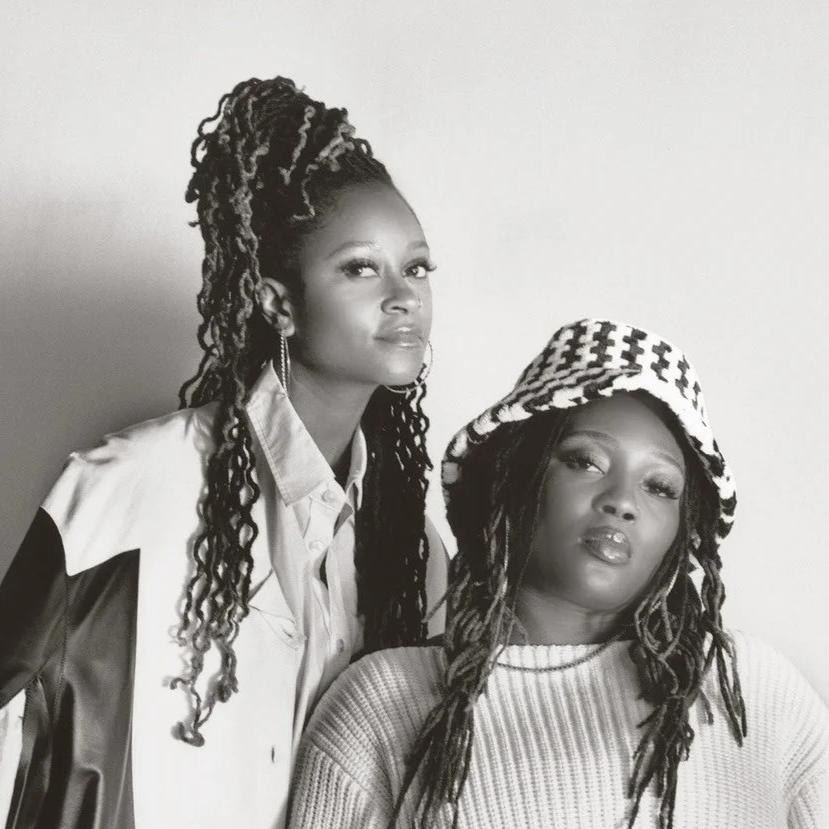
Nova Wav is an American Grammy Award–winning producing and songwriting duo composed of Denisia “Blu June” Andrews and Brittany “Chi” Coney. Over the course of their career, Nova Wav have written and produced tracks and albums for artists including Beyoncé, Rihanna, DJ Khaled, Ariana Grande, Jay-Z, Pop Smoke, Nicki Minaj, Teyana Taylor, H.E.R, Kehlani, Kodak Black, City Girls and more.

Most recently, the duo co-wrote and co-produced the lion’s share of Beyoncé’s critically acclaimed album Renaissance, which won two Grammy Awards including Best R&B Song for “Cuff It” and Best Electronic / Dance Music Album, in addition to being nominated for Album of the Year. “Cuff It” also reached #1 at Rhythmic, Urban, and R&B radio, and remains in the top 10 at Top 40 radio. 

Signed to Warner Chappell Music the duo was recently named as one of Billboard’s Future 50: Predicting R&B/Hip Hop’s Next Legends, one of Billboard’s 2018 R&B/Hip-Hop 100 Power Players and listed on Revolt's Top 9 producers of 2019. In 2020, Nova Wav co-wrote Beyoncé’s charity single, “Black Parade.” It was the most nominated song at the 63rd Annual Grammy Awards, with four nominations including Record of the Year and Song of the Year. The song won Best R&B performance. In 2022, Nova Wav won their next Grammy Award for Best R&B Performance for their work on Jazmine Sullivan's "Pick Up Your Feelings."

View Event →
Self-evolving World Gen: From Prompting to Living Intelligence
Jan
24

Self-evolving World Gen: From Prompting to Living Intelligence

Self-evolving World Gen: From Prompting to Living Intelligence

What is the next platform shift, with embodied, self-evolving AI? We are entering the age of living intelligence, where world models become the foundation of the next platform shift - moving from content generation to reality orchestration. Built upon large-scale, multimodal simulation models that understand physics, agency, and context, with long memory, these world models evolve into the substrate of embodied AI — capable of reasoning spatially, emotionally, and socially within persistent environments. Above this foundation emerges the agentic platform layer, where generative agents act as creators, curators, and collaborators, shaping adaptive worlds that learn from every interaction. On the surface, this manifests as the new AI consumer experience - where users no longer open apps or watch media but step into continuously co-evolving realities that remember, respond, and reconfigure themselves around human intent. This keynote explores how creators can harness the triad of video, mesh, and LLM×G-Splat generation to build AI-native worlds, that is a living creature.

About the Speaker:

Yiqi Zhao, Product Design Lead at Meta, specializes in AI-driven spatial computing and wearable devices.

Her team has delivered human-centric innovations, including the Meta Quest headsets, Metaverse 3D AI effort like Meta Horizon Engine, AI NPC, WorldGen, AssetGen and Creator Assistant. With an HCI research background at Harvard and MIT Media Lab, Yiqi began her 3D journey in brain-computer interfaces (EEG) and wearable AI. Previously, she led Unity’s platform initiatives, including visionOS for Apple Vision Pro. She also made her mark in the gaming sector by shipping Destiny 2. Additionally, she leads Deepcake, an AIGC community with global awards.

View Event →
The Pitch Room: RH for Startups Showcase
Jan
24

The Pitch Room: RH for Startups Showcase

The Pitch Room: RH for Startups Showcase

Companies curated by:
Karen Lam, Program Lead - RH for Startups
Maria Rice, co-founder - RH for Startups

About the Host:

Rob Hughes III,
co-founder of Koo Capital, has spent over a decade working with high-growth companies across the country. At First Republic Bank, he helped build the Startup Banking practice, supporting thousands of startups and hundreds of VC firms, accelerators, and ecosystem partners. At Koo Capital, Robert brings a passion for connecting founders with the right resources at every stage of growth.

View Event →